

Analysis of Core Technologies for Rigid-Flex PCBs

In today's era of rapid iteration of high-end electronic devices, engineers are confronted with a core contradiction: how to achieve more complex circuit designs in smaller spaces while ensuring the long-term reliability of devices under harsh environments?
Traditional PCB technology has clearly shown its bottlenecks:
'The Space Prisoner' Dilemma:
The stacked layout of rigid PCB makes it difficult for devices such as smart watches and endoscopes to break through their thickness limits.
'The Fragile Joint' Challenge:
Ordinary flexible circuits face the risk of fracture due to more than 100,000 bends per year at the hinge of foldable smartphones.
Connector Curse:
In the BMS system of new energy vehicles, 30% of failures result from poor connector contact.
The emergence of Rigid-Flex PCB is like the 'Transformers' of electronic design.
Space Magic:
The rigid-flex hybrid structure reduces the smartphone motherboard volume by approximately 60%.
Mechanical Revolution:
The service life of dynamic bending parts exceeds 200,000 cycles.
Connection Evolution:
Reduces connector usage by 87% in ADAS sensor modules.
Signal Continuity:
Continuous conduction via rigid-flex integration delivers superior signal transmission performance.
This is not merely an upgrade of materials, but a paradigm shift in electronic engineering. When circuit boards can possess both strength and flexibility like human joints, we are redefining what constitutes a 'reliable' electronic architecture.
1.Industry Status and Demand Data
1.Market Size and Growth
The rigid-flex PCB industry is in a period of rapid growth, driven by the trends of slimmer consumer electronics, higher reliability requirements for automotive electronics, and miniaturization of medical devices, leading to a continuous expansion of the market scale. According to industry analysis data, the global rigid-flex PCB market size is projected to reach USD 12 billion in 2025, with a compound annual growth rate exceeding 15%. China accounts for 50% of the global market share, making it the world's largest rigid-flex PCB market, mainly benefiting from the rapid development of consumer electronics, automotive electronics and 5G communications.
2 Technology Development
Material Innovation:
Polyimide (PI) substrates remain the mainstream, while low-loss high-frequency materials (such as MPI) are increasingly applied in 5G and AI servers.
Manufacturing Process Upgrade:
Laser drilling (HDI) and 3D packaging technologies drive the development of high-density interconnect (HDI) rigid-flex boards
3 Application Field Distribution
Consumer Electronics (35%): Foldable smartphones (such as Samsung Galaxy Z Fold), TWS earbuds, smart watches, etc.
Automotive Electronics (25%): ADAS sensors, automotive displays, Battery Management System (BMS).
Medical Devices (15%): Miniaturized equipment such as endoscopes and pacemakers.
Aerospace and Military (20%): Satellite communications, radar systems, etc.
2.Market Demand Characteristics of Rigid-Flex PCB

1 Demand for High Density and Miniaturization
Consumer electronics (such as foldable smartphones) drive the demand for any-layer HDI rigid-flex PCBs, with line width/spacing ≤ 50μm becoming a trend.
The demand for high-frequency and high-speed PCB in AI servers and 5G base stations has surged, requiring low dielectric loss materials (such as PTFE).
2 High Reliability and Lightweight
Automotive electronics (e.g., 800V high-voltage platforms) require PCB to withstand high temperatures (-40℃~150℃) and resist vibration. In the aerospace sector, radiation-resistant and lightweight rigid-flex boards are needed to reduce satellite payload.
3 Emerging Market Drivers
★ Satellite internet (such as Starlink) drives the demand for lightweight and radiation-resistant PCB
★ Humanoid robots and AR/VR devices drive the demand for 3D packaged rigid-flex PCB。
3. In-depth Analysis of Industry Pain Points and Challenges

Although rigid-flex PCB technology is developing rapidly and has broad application prospects, it still faces many structural challenges in the actual process of R&D, manufacturing and application. These pain points and difficulties not only affect product performance and reliability, but also restrict the popularization speed and market expansion of the technology. An in-depth analysis of these key issues will help the industry identify innovation directions and promote the development of rigid-flex PCB technology to a higher level。
1 Stress Concentration and Delamination Failure in the Transition Zone
The transition zone between rigid and flexible materials in rigid-flex PCB is the area with the highest mechanical stress concentration and also a high-incidence area for product failure. Industry data shows that approximately 62% of early failures in rigid-flex PCB originate from issues in the transition zone. Defects in the transition zone mainly manifest as adhesive extrusion, protruding dielectric materials, cracking, and haloing
2 Poor interlayer alignment accuracy in high-density interconnects
The trend toward miniaturization of electronic devices is driving rigid-flex PCB toward high-density interconnects. In space-constrained applications such as foldable smartphones, the line width/spacing of rigid-flex PCB has been reduced to below 50μm, and high-density designs also introduce challenges in interlayer alignment. Rigid-flex PCB typically feature complex stack-ups of more than 10 layers, requiring the interlayer alignment tolerance between rigid and flexible sections to be controlled within ±25μm.
3 Metallization Failure of Vias in Multi-Layer Flexible Boards
Rigid-flex PCB contain multiple flexible inner layers, mainly composed of polyimide (PI). Poor chip removal during the drilling process causes severe scratching of the PI film. During subsequent adhesive removal and via metallization, the bonding strength between the copper plating and the flexible layers is weak, resulting in thin copper coverage at the PI area or discontinuous copper plating. This leads to via copper fracture during end-user STM testing or thermal cycling tests.
Through years of R&D and low-volume verification, SunKey has completely eliminated such issues by introducing advanced materials and improving manufacturing processes.
Four Core Technological Pillars of SunKey's Rigid-Flex PCB Manufacturing Services

Since its founding in 2010, SunKey has focused on the manufacturing of various types of printed circuit boards, including high-density multilayer boards, HDI boards, metal-based boards, high-frequency boards, step-impedance boards, and rigid-flex boards. We provide comprehensive services ranging from rapid prototyping to mass production.
In the niche field of rigid-flex technology, we have invested in R&D since 2015 and gradually developed four core technological pillars to solve industry challenges for our customers.
In addition, SunKey mainly adopts high-end materials in the industry to resolve delamination and blow-out failures caused by improper material selection and inconsistent Z-axis expansion coefficients in high-layer-count boards.
Our key flexible material suppliers include:
Zhongshan Singoal AS2L-AD
Panasonic Japan R-F777
DuPont USA AP series
For rigid boards, we primarily use:
Shengyi Technology S1000-2M,
For high-speed materials, we mainly employ:
Panasonic M4 and M6 series
Taiwan Union Tech TU-872SLK series
For high-frequency materials, our main choices are:
Rogers Series 3 and Series 4
4. Four Core Technological Pillars
HDI Rigid-Flex
High-Layer-Count Rigid-Flex
High-Frequency High-Speed Rigid-Flex
Optical Communication Rigid-Flex
Challenge 1: Uncontrolled Adhesive Flow and Delamination & Burst Failure in the Rigid-Flex Transition Zone

Business Pain Point: This is the 'invisible killer' that causes intermittent failures and reduced reliability in end-use applications. Any minor defect can be amplified under harsh environments, resulting in significant losses.
SunKey Electronics' Precision Solutions
Intelligent Adhesive Filling and Blocking:
We not only select prepregs with higher resin content and flow to meet the adhesive filling requirements of high-layer-count products, but also accurately calculate the thickness of each layer of materials through algorithms to match the adhesive-blocking materials of corresponding thickness. This ensures that the resin is 'just right' during lamination—fully filling the cavities without overflowing and contaminating critical flexible areas.
Surgical-Grade Cover Removal:
For the rigid board cover removal process, we employ high-precision depth-controlled routers with accuracy strictly controlled within ±30µm. Similar to minimally invasive surgery, this technology precisely cuts through the rigid layers without damaging the underlying flexible boards, physically eliminating defects such as edge bursting and white edges that may occur during cover removal, and ensuring perfect edge quality of the products.
Value to You:
What you receive is not merely a functional sample, but a fully reliable product that performs consistently around the clock. It exhibits exceptional stability and an extended service life, even under thermal cycling and complex stress environments.
Challenge 2: Interlayer Alignment in High-Density Designs – A Miss by a Hair Results in an Error of a Thousand Miles.
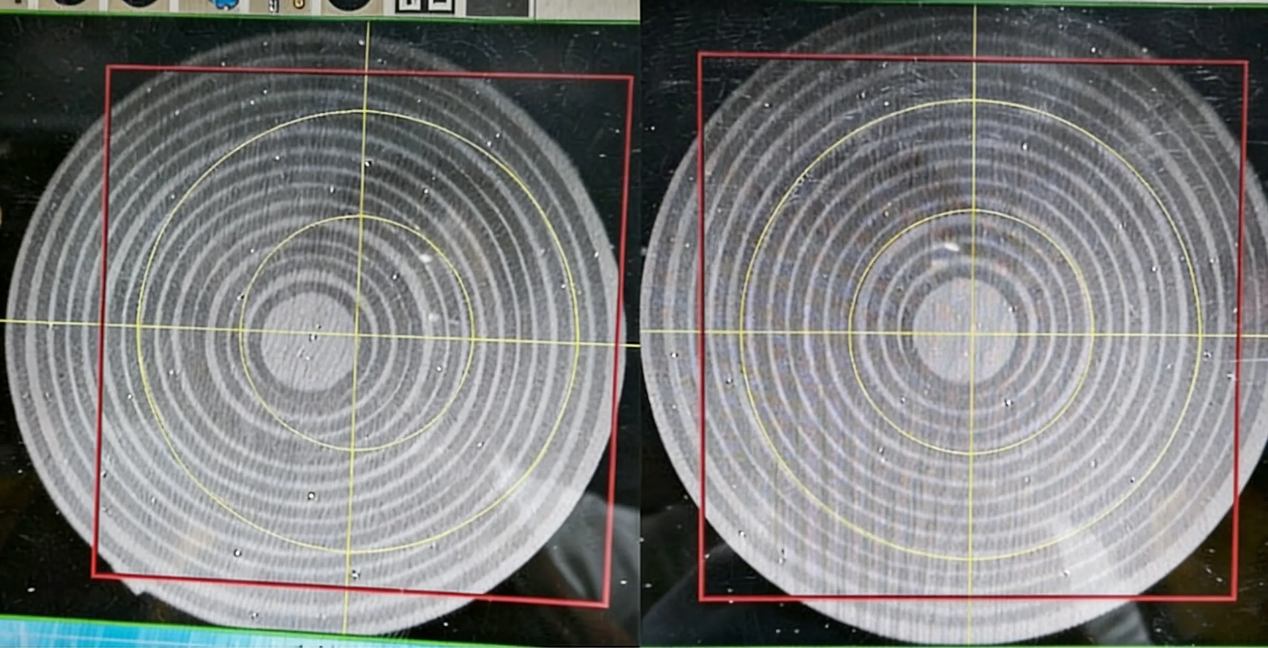
Business Pain Point: With the continuous increase in design density, even a slight deviation in interlayer alignment can lead to the scrapping of an entire batch of products, directly affecting R&D progress and time-to-market.
SunKey Electronics' Full-Link Control Solution
1.Traceability from the Source:
We measure and control the coefficient of thermal expansion for materials from different suppliers and batches, ensuring the physical properties of each batch fall within our predefined database.
2. Strong Consistency in Process Flow:
During processing, we adhere to a unified processing direction and provide corresponding shrinkage and expansion compensation coefficients by material and process stage, ensuring a high degree of consistency in the expansion and contraction ratios from core board to core board.
3. Precise Positioning with 'X-Ray Vision':
After lamination, we adopt X-ray target drilling technology with separate coefficient adjustment for final positioning. This system can 'see through' inner layers and accurately compensate for slight deformations during lamination, ultimately achieving:
★Interlayer alignment accuracy for high-layer-count products is controlled within ±25µm。
★The hole-to-line safety distance can stably meet 5mil requirements。
Value to You:
You can pursue ultra-high-density designs with greater confidence. Our robust process control capabilities ensure the perfect reproduction of your complex designs, significantly improving first-pass prototyping success rates and accelerating your product iteration cycle.
Challenge 3: Guard Against 'Hole Copper Cracking' in Flexible Areas – Putting an End to the Yield Nightmare in End-Product Assembly

Business Pain Point: Hole copper fracture is one of the core causes of flex board failure during end-product assembly (SMT) or in high and low temperature environments, directly affecting the yield and repair cost of the final product
SunKey Electronics' Fundamental Solution
Root Cause Analysis:
We have identified that the root causes are damage to the PI substrate during drilling, as well as insufficient adhesion between the hole copper and the flex layer in the subsequent resin removal and metallization processes.
Dual Innovation in Materials and Processes:
After years of R&D and low-volume verification, we have fundamentally solved this industry challenge by introducing new materials with specific properties and optimizing our process methods.
Our solution has withstood rigorous testing and has now achieved:
★ Sample yield reaches over 90%
★ Mass production yield is stably above 95%
Value to You:
Significantly reduce the end-assembly defect rate caused by PCB inherent flaws. What we deliver is a proven, high-reliability product that provides stable supply chain assurance for your mass production and directly lowers your overall manufacturing cost.
4.Rigid-Flex PCB Product Cases
Case 1: C12 - High-Reliability Multilayer PCB

Challenge:12-layer structure, reliable transition between flexible and rigid regions。
Achievement:Adopting the material system of Shengyi S1000-2M + AS2L-AD, with minimum line width/space of 0.09 mm, which perfectly meets the customer's stringent requirements for stability.

Case 2:C16 - 16-Layer Board with Ultra-High Density Stackup

Challenge:The 16-layer structure includes 12 flexible layers, achieving ultra-high density integration within a board thickness of 2.0 mm.
Achievement:Using Taiwan Union TU-872SLK high-speed material and DuPont AP film, the minimum line width/space is reduced to 0.065 mm, successfully supporting the customer's innovation in the AR/VR field.
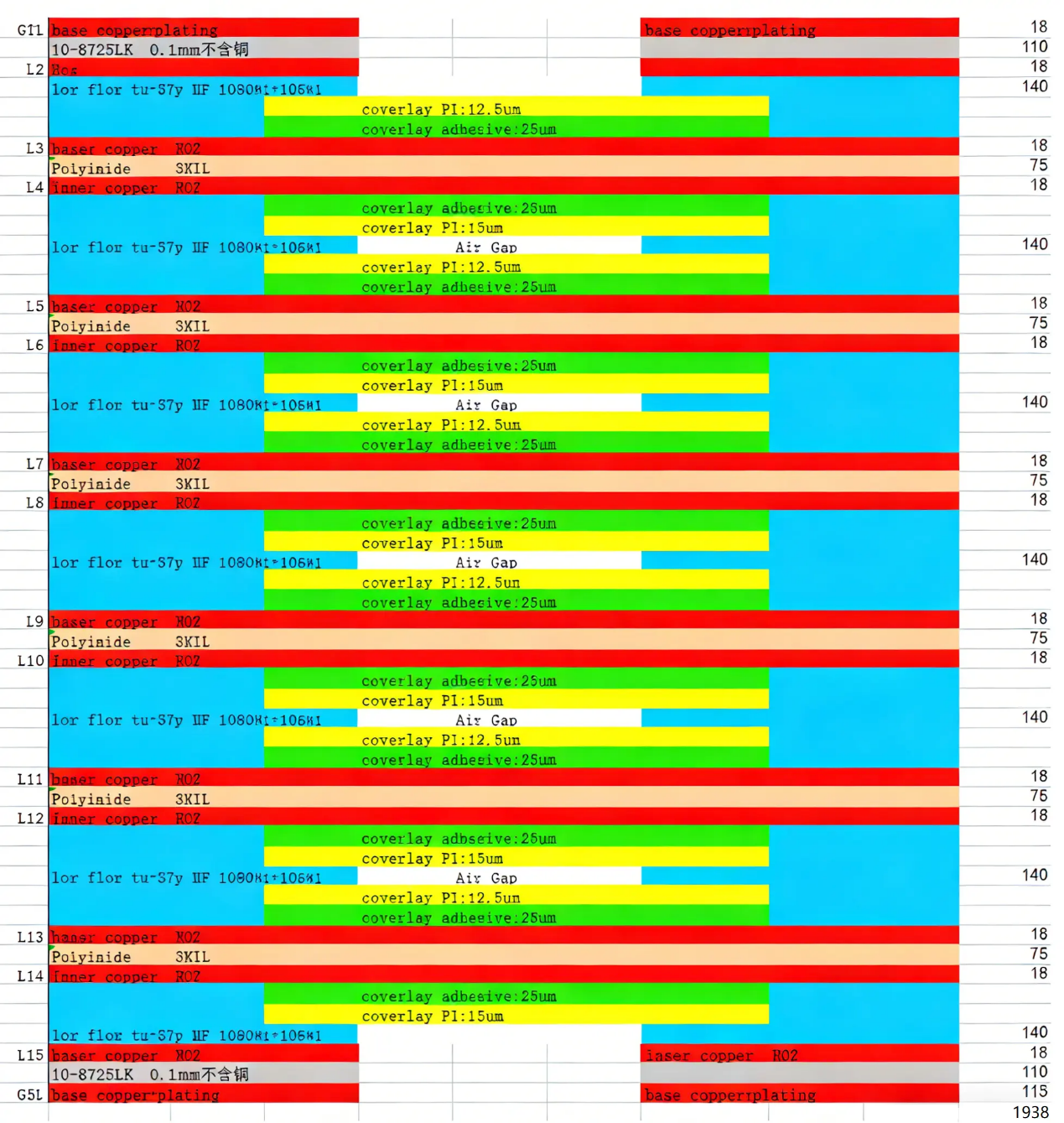
Case 3:C12 - High-Frequency Performance Combined with Blind Via Design

Challenge:12-layer rigid-flex PCB with blind vias on layers 1–4 and 9–12, adopting Panasonic R-F777 high-speed material.
Achievement:Achieved a line width of 0.075 mm and a minimum hole diameter of 0.15 mm, providing customers with high-performance, highly reliable solutions for 5G communication equipment.

5. SunKey Electronics Rigid-Flex PCB Manufacturing Capabilities
Our capability boundaries are the starting point of your innovation. We do not only solve challenges, but also translate precision manufacturing into a clear capability list for your reference at the initial design stage.

Contact Us
If your product also faces challenges related to space, reliability or performance, do not fight alone.The right manufacturing partner can help bring your great vision to life smoothly.


 :
: :
: : A1 Building,Ditang Industrail B zone,Shajing Street,Bao'an
  :+86 13244860273

